English

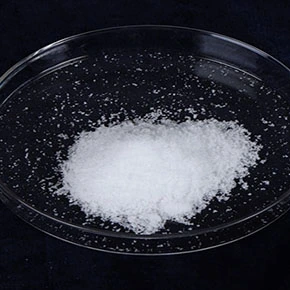
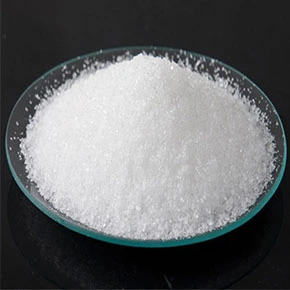
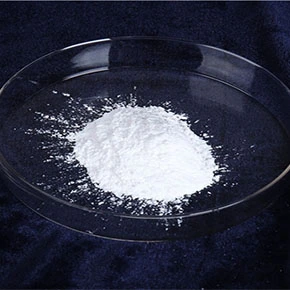
A Tweens surfactant is a polysorbate-based nonionic surfactant commonly used for emulsification, solubilization, dispersion and formulation stability. Products such as Tween 20, Tween 40, Tween 60 and Tween 80 are widely considered in food, pharmaceutical, cosmetic and industrial formulations where oil- and water-based ingredients need to remain evenly distributed.
Choosing the right Tweens surfactant requires more than selecting a Tween number. Fatty-acid composition, HLB value, formulation conditions and compatibility with other ingredients can all affect performance.
ChemFW supplies chemical materials for different formulation and industrial applications, supporting customers who need consistent specifications and reliable supply.
Tweens surfactant products are nonionic polysorbates designed to reduce interfacial tension and improve compatibility between ingredients with different polarities.
Polysorbates are commonly used as emulsifiers, dispersing agents and solubilizers. Because they are nonionic, they generally provide broad compatibility with other formulation ingredients.
A Tweens surfactant may be selected when a formulation needs to stabilize an oil-in-water emulsion, distribute oils more evenly or improve the dispersion of poorly water-soluble ingredients.
Performance still depends on the complete formulation. Concentration, pH, temperature, oil composition and other ingredients should all be evaluated during formulation testing.
The main Tweens surfactant types differ in fatty-acid composition and HLB characteristics, which influence their use in different formulations.
Common grades include:
Tween 20: Mainly associated with lauric acid and commonly cited with an HLB value around 16.7.
Tween 40: Mainly associated with palmitic acid, with an HLB value around 15.6.
Tween 60: Primarily associated with stearic acid and an HLB value around 14.9.
Tween 80: Mainly associated with oleic acid and commonly has an HLB value around 15.0.
These values can help with preliminary selection, but HLB should not be the only factor. Oil-phase chemistry, temperature and finished-product stability also matter.
Buyers sourcing Tween 80 should also compare documentation and supply capability when evaluating a Tween 80 supplier.
Tweens surfactant properties are influenced by polysorbate type, HLB value, formulation composition and storage conditions.
| Type | Main Fatty-Acid Association | Approx. HLB | Common Selection Focus |
|---|---|---|---|
| Tween 20 | Lauric acid | 16.7 | Solubilization and O/W emulsification |
| Tween 40 | Palmitic acid | 15.6 | Emulsion stabilization |
| Tween 60 | Stearic acid | 14.9 | Cream and emulsion systems |
| Tween 80 | Oleic acid | 15.0 | Food, pharma and cosmetic systems |
Most polysorbates have relatively high HLB values, which is why they are frequently used in oil-in-water systems.
However, solubility and stability may change when oils, actives, electrolytes or other surfactants are added. Storage conditions should also follow supplier recommendations to maintain product consistency.
In many applications, a Tweens surfactant is selected specifically because it functions as a nonionic surfactant, but final compatibility should still be verified through testing.
Tweens surfactant products are used across multiple industries to support emulsification, dispersion and solubilization.
In food formulations, permitted polysorbates may help stabilize emulsions and keep oil- and water-based ingredients evenly distributed.
In pharmaceutical formulations, suitable polysorbate grades may be used as excipients for solubilization or stabilization. These applications often require greater attention to purity, documentation and batch consistency.
In cosmetic products, Tweens surfactant materials can be used in creams, lotions, cleansing products and fragrance-containing systems. The selected grade should work effectively with oils, active ingredients and other formulation components.
The correct choice always depends on the specific formulation rather than assuming one Tween grade will perform equally well in every system.
A reliable Tweens surfactant supplier should provide consistent specifications, suitable product grades, quality documentation and dependable supply capability.
Industrial buyers should consider:
Product specification: Confirm Tween type, grade and relevant physical properties.
Quality documentation: Check certificates and testing information required for the application.
Batch consistency: Stable specifications are important for repeat formulation performance.
Packaging and logistics: Suitable packaging helps protect product quality during transportation and storage.
Technical communication: The supplier should understand the intended application and product requirements.
Working with an experienced polysorbate supplier can help reduce specification mismatches and improve purchasing consistency.
ChemFW supports customers sourcing Tweens surfactant products based on product grade, quantity and application requirements.
For B2B procurement, buyers should clearly communicate the required Tween type, expected quantity, application, packaging and documentation before requesting a quotation.
ChemFW works with customers sourcing surfactants and other chemical materials for different formulation requirements. Clear specifications help both parties confirm product suitability and establish a more reliable supply process.
Choosing the correct Tweens surfactant requires understanding the differences among Tween 20, Tween 40, Tween 60 and Tween 80. Fatty-acid composition, HLB value, formulation conditions and ingredient compatibility all influence final performance.
For industrial buyers, supplier consistency, documentation, packaging and application suitability should also be considered alongside price. ChemFW supports customers seeking Tweens surfactant solutions for food, pharmaceutical, cosmetic and industrial applications.
A Tweens surfactant is a polysorbate-based nonionic surfactant used for emulsification, dispersion and solubilization.
Tween 20 is mainly associated with lauric acid, while Tween 80 is mainly associated with oleic acid.
Yes. Polysorbates are generally classified as nonionic surfactants.
Compare fatty-acid composition, HLB value, formulation requirements and compatibility testing.
Confirm product type, grade, specifications, documentation, packaging and quantity.
No. Different formulations have different compatibility and performance requirements, so suitability should be tested before production.