


English

Purchasing anionic surfactants in bulk involves more than comparing a few prices per kilogram. Buyers must confirm the chemical identity, active content, physical form, application suitability, packaging, documentation and consistency of the supplied material.
The sourcing channel also matters. A buyer may purchase directly from an anionic surfactant manufacturer, work with a specialized surfactant supplier, use a regional distributor or consolidate several chemicals through an international trading company.
Each option offers a different balance of price, minimum order quantity, product range, delivery time and technical support.
Forward Science is a China-based chemical supplier established in 2019 in Wuxi, Jiangsu Province. We focus on the development, supply and technical service of biological and chemical products. Our current anionic surfactant range includes sodium dodecyl benzene sulfonate and sodium dodecyl sulfate for industrial, cleaning and technical applications.
This guide explains where to buy anionic surfactants, what affects wholesale prices and how to evaluate a potential supplier before placing a bulk order.
Direct manufacturers are often suitable for stable, high-volume purchasing.
Specialized suppliers may offer broader sourcing and technical support.
Distributors can be more practical for smaller or urgent orders.
Bulk surfactant prices should be compared on the basis of active matter and landed cost.
Samples should be evaluated in the buyer’s actual formulation before a large order.
Forward Science currently supplies SDBS and SDS as part of its anionic surfactant range.
A detailed RFQ helps the supplier recommend a suitable grade and prepare an accurate quotation.
Anionic surfactants are available through several sourcing channels. The best option depends on purchasing volume, technical requirements, delivery schedule and destination market.
A direct anionic surfactant manufacturer produces one or more surfactant families and supplies them in industrial quantities.
Purchasing directly from a manufacturer may provide:
Competitive factory-level pricing
Greater visibility into production
More control over specifications
Customized physical forms or packaging
Long-term supply agreements
Direct communication about production capacity
This option is generally most suitable for detergent factories, industrial chemical formulators and other buyers with regular bulk demand.
However, manufacturers may have higher minimum order quantities. A factory specializing in one surfactant family may also be unable to consolidate all the chemicals needed for a complete formulation.
A specialized anionic surfactant supplier may source products from its own facilities, cooperating production sites or qualified manufacturing partners.
This type of supplier may provide:
Access to several chemical products
Product selection support
Export coordination
Technical document preparation
Sample arrangements
Consolidated purchasing
More flexible order structures
Forward Science operates as a chemical supplier with product analysis, product customization and technical consulting capabilities. This enables us to support customers who need more than a basic price quotation, especially when the application or required specification must be clarified before ordering.
When evaluating a specialized supplier, buyers should still confirm the product origin, manufacturing location, quality responsibility and batch documentation.
A surfactant distributor purchases materials from manufacturers or international suppliers and maintains regional stock.
A distributor may offer:
Smaller order quantities
Shorter delivery times
Local invoicing
Domestic technical support
Easier emergency replenishment
Reduced import and customs work
The unit price may be higher because it includes warehousing, inventory financing, local transportation and distribution costs.
For a buyer that only needs a few bags or drums at a time, a local distributor can still provide a lower overall purchasing cost than importing a full container.
A chemical trading company can coordinate purchasing from several producers.
This may be useful when a buyer needs:
Multiple surfactant types
Surfactants and other formulation chemicals
Mixed-container shipments
Export coordination
Support communicating with different factories
The buyer should determine whether the trading company can provide reliable traceability and take responsibility for product quality.
Online marketplaces can be helpful for identifying potential suppliers and requesting preliminary quotations.
However, a marketplace listing does not prove that a company manufactures the product, controls the supply chain or can provide consistent specifications.
Marketplace research should therefore be followed by supplier verification, document review and sample testing.
The cheapest sourcing channel is not always the most economical choice.
| Sourcing Channel | Main Advantages | Possible Limitations | Best Suited For |
|---|---|---|---|
| Direct manufacturer | Production visibility, bulk pricing and customization | Higher MOQ or narrower product range | Regular high-volume orders |
| Specialized supplier | Product selection, technical service and export support | Manufacturing sources must be verified | International and multi-product sourcing |
| Local distributor | Fast delivery and smaller quantities | Higher price per kilogram | Trial, urgent or low-volume orders |
| Trading company | Consolidation of different chemicals | Less direct production control | Mixed chemical shipments |
| Online marketplace | Fast discovery of potential sources | Supplier quality varies widely | Initial market research |
A detergent manufacturer purchasing several tons per month may benefit from a direct or specialized wholesale supplier.
A laboratory, pilot plant or small formulator may prefer a distributor because purchasing a full production batch would create unnecessary inventory.
Forward Science currently presents two main anionic surfactants in its industrial chemical portfolio:
Sodium dodecyl benzene sulfonate, CAS No. 25155-30-0
Sodium dodecyl sulfate, CAS No. 151-21-3
Both products are negatively charged surfactants, but their chemical structures, specifications and common applications are different.
Sodium dodecyl benzene sulfonate is commonly abbreviated as SDBS. It is an alkylbenzene sulfonate used for functions such as:
Detergency
Wetting
Emulsification
Dispersion
Foaming
Soil removal
It may be considered for detergents, cleaning formulations, technical dispersions and selected industrial processes.
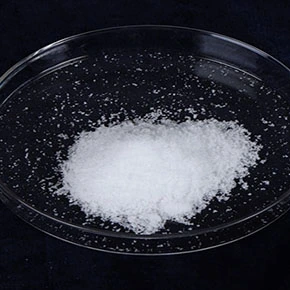
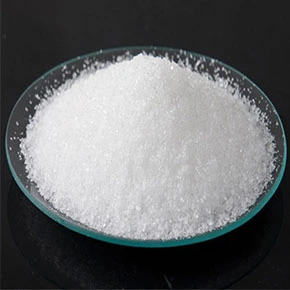
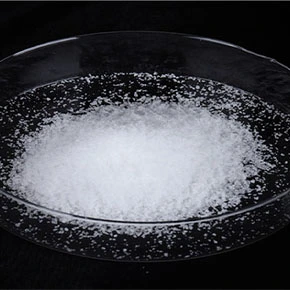
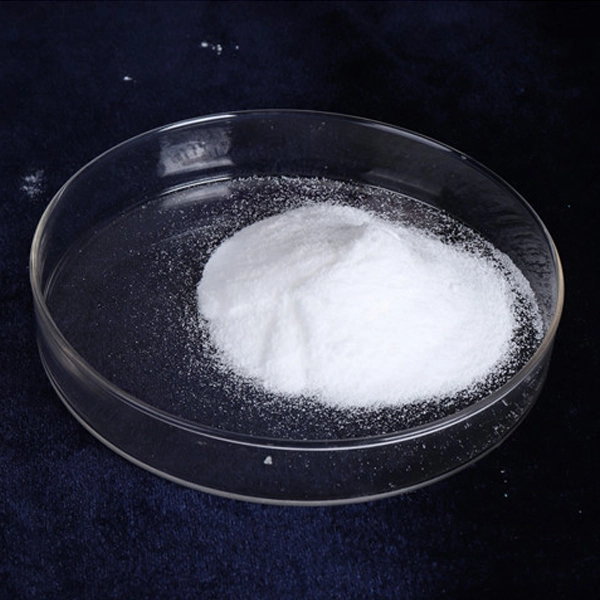
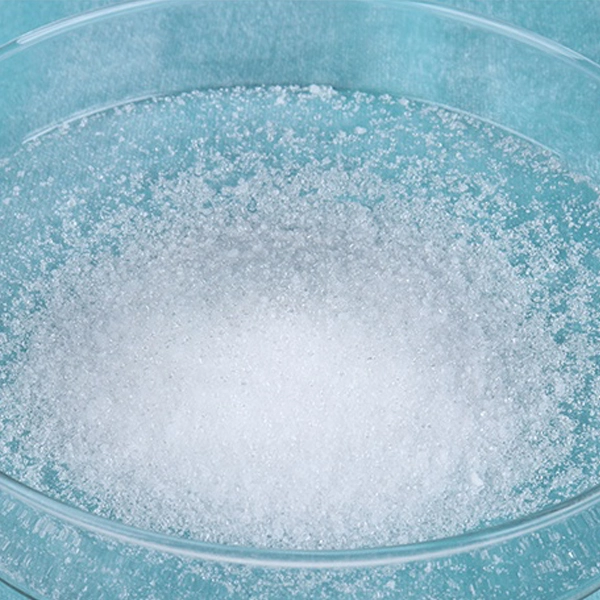
The Forward Science SDBS product page currently lists a crystalline specification of 95±3% active matter. The product is described as white or slightly yellow powdery particles, with a specified pH range of 8.5–11.5 for a 1% solution. Standard packaging is listed as 25 kg per bag.
These published parameters provide a useful starting point, but buyers should request the current specification and batch certificate of analysis before confirming an order.
Sodium dodecyl sulfate is commonly abbreviated as SDS and is also known as sodium lauryl sulfate in many commercial applications.
It may provide:
Foaming
Wetting
Detergency
Emulsification
Protein denaturation in laboratory applications
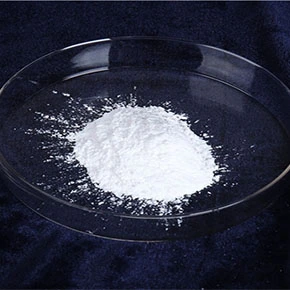
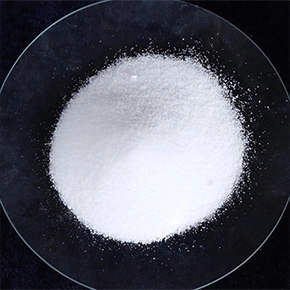
Forward Science currently lists an SDS specification of at least 99% active matter on a dried basis. The product is supplied as a white powder and is packed in 25 kg bags.
SDS and SDBS should not be treated as interchangeable products. The correct option depends on the formulation, substrate, pH, water conditions, foam requirements and end-use regulations.
The wider wholesale market includes several anionic surfactant families:
Alkylbenzene sulfonates
Alkyl sulfates
Alkyl ether sulfates
Alpha olefin sulfonates
Sulfosuccinates
Carboxylate surfactants
Phosphate ester surfactants
Common commercial examples include:
Sodium dodecyl benzene sulfonate
Linear alkylbenzene sulfonate
Sodium dodecyl sulfate
Sodium laureth sulfate
Alpha olefin sulfonate
Dioctyl sodium sulfosuccinate
Not every chemical supplier carries all these products.
Buyers should also avoid assuming that one grade can be used across household cleaning, personal care, laboratory, agricultural and industrial applications. Different markets may impose different requirements for purity, impurities, documentation and regulatory compliance.
The price of a bulk surfactant is influenced by chemical, production, packaging and logistics factors.
Different surfactants require different feedstocks and manufacturing processes.
A widely produced detergent surfactant generally has a different price structure from a specialized wetting or dispersing agent.
Buyers should first identify the required function and then compare equivalent products. Comparing unrelated surfactants only by price per kilogram can lead to poor formulation decisions.
Active content is one of the most important price variables.
Consider two hypothetical products:
Product A: 95% active matter
Product B: 60% active matter
Product B may have a lower unit price but contain considerably more water or other non-active material.
A basic comparison can be made using:
Cost per kilogram of active matter = Product price ÷ Active fraction
For example, a material priced at USD 1.20/kg with 60% active matter has an active-material cost of:
USD 1.20 ÷ 0.60 = USD 2.00 per active kilogram
The same calculation can be applied when comparing different SDBS, SDS or other bulk surfactant grades.
Anionic surfactants may be supplied as:
Powder
Granules
Flakes
Crystals
Paste
Concentrated liquid
Diluted aqueous solution
A high-active powder can reduce freight cost per unit of active matter. However, it may require dust collection, controlled addition or additional dissolution time.
A liquid may be easier to pump into a production line but can carry more water, increasing transport weight.
The most economical form depends on the buyer’s processing equipment and labor requirements.
Technical, industrial, laboratory, cosmetic and other specialized grades may have different specifications.
Price may be influenced by:
Active content
Moisture
Inorganic salt content
Residual organic matter
Color
Odor
Heavy metal limits
Particle size
Microbial limits
Additional purification
Regulatory testing
A higher-purity product is not always necessary. Buyers should select a grade that meets the application without paying for controls that provide no practical benefit.
Anionic surfactant prices can be affected by changes in:
Linear alkylbenzene
Fatty alcohols
Alpha olefins
Sulfur-based raw materials
Ethylene oxide
Caustic soda
Energy
Packaging materials
Market volatility may cause suppliers to offer a limited quotation-validity period.
Large orders can reduce the cost of:
Production setup
Packaging
Inland transportation
Export handling
Documentation
Freight per ton
However, a lower bulk price must be balanced against storage capacity, cash flow, shelf life and demand stability.
Purchasing more than the business can use may increase the real cost through inventory financing and material deterioration.
Common bulk surfactant packaging includes:
20 kg or 25 kg bags
Fiber drums
Plastic drums
Steel drums
Intermediate bulk containers
Palletized bags
Bulk tankers
Forward Science currently lists 25 kg bag packaging for both SDBS and SDS.
Customized bags, labels, pallets or export packaging may change the quotation and MOQ.
A quotation may be provided under:
EXW
FCA
FOB
CFR
CIF
DAP
DDP
Buyers should compare offers under the same Incoterm.
A low EXW price may become expensive after inland transport, export handling, ocean freight, insurance, customs clearance and final delivery are added.
The landed cost is usually a better purchasing measure than the product price alone.
A standard supply package may include:
Technical data sheet
Safety data sheet
Product specification
Certificate of analysis
Additional requirements may include:
Certificate of origin
Composition statement
Restricted-substance declaration
Regulatory statement
Third-party test report
Customized inspection
Destination-specific documentation
Buyers should list all required documents in the initial RFQ. Requesting additional testing after production can delay shipment.
The sodium dodecylbenzene sulfonate price depends on the requested grade and commercial terms.
Important variables include:
Active matter
Powder, crystal, paste or liquid form
Moisture
Ash content
Sodium sulfate content
Unsulfonated matter
pH
Color
Particle size
Packaging
Quantity
Destination
Incoterm
Documentation
Forward Science currently offers an SDBS crystalline grade with a published active-matter specification of 95±3% and standard 25 kg bag packaging. Buyers can request the latest technical data, certificate of analysis, sample availability and current bulk price based on their quantity and destination.
A useful SDBS price request should contain more information than the product name.
For example:
“Please quote sodium dodecyl benzene sulfonate, CAS No. 25155-30-0, approximately 95% active matter, 25 kg bags, quantity 5 metric tons, CIF Hamburg. Please include the TDS, SDS, typical COA and lead time.”
This enables the supplier to prepare a quotation that can be compared with competing offers.
Determine whether the company acts as:
Manufacturer
Supplier
Distributor
Stockist
Exporter
Trading company
Ask for the manufacturing location and country of origin.
A reliable supplier should clearly explain its role and should not imply that every listed material is produced at the same facility.
The product specification should cover the parameters that matter to the application.
For SDBS, these may include:
Active matter
Appearance
Ash content
pH
Moisture
Bulk density
Particle form
For SDS, the relevant parameters may include:
Active content
Moisture
Sodium sulfate
Sodium chloride
pH
Solubility
Color
Compare test methods as well as numerical limits. Results obtained using different methods may not be directly equivalent.
The technical data sheet explains typical product characteristics and applications.
The safety data sheet provides information about:
Hazards
Handling
Storage
Personal protection
Spill response
Transportation
The certificate of analysis provides the test results for a specific batch.
All three documents serve different purposes and should be reviewed before bulk approval.
A specification cannot fully predict performance in the buyer’s formulation.
Test the sample under realistic conditions for:
Dissolution
Wetting
Detergency
Foaming
Emulsification
Dispersion
Viscosity
Color
Odor
Storage stability
Compatibility with other ingredients
The test should use the same water quality, addition sequence, temperature and equipment planned for production.
A suitable supplier should be able to discuss more than price and availability.
Useful technical support may include:
Product identification
Grade comparison
Sample coordination
Specification review
Application discussion
Product analysis
Customized product requirements
Troubleshooting support
Forward Science combines chemical supply with product analysis, customization and technical consulting. Our technical service model is intended to help customers clarify requirements before moving from sample evaluation to commercial purchasing.
Ask how the supplier controls:
Incoming raw materials
In-process testing
Final product inspection
Batch release
Retained samples
Traceability
Nonconforming products
Customer complaints
Forward Science maintains a quality-control function and displays its workshop, packaging, warehouse and transportation operations as part of its company information.
For recurring purchasing, ask about:
Normal production or supply capacity
Standard lead time
Peak-season lead time
Available inventory
Minimum production batch
Backup sourcing arrangements
Annual contract options
A low price is not useful if the supplier cannot maintain delivery continuity.
International suppliers should understand:
Export packaging
Pallet requirements
Container loading
Commercial invoices
Packing lists
Certificates of origin
Product classification
Customs documentation
Destination-country labeling
Forward Science is located in Wuxi, Jiangsu Province, China, and states that its international business has expanded to customers in European and American markets.
| Specification | Why It Matters |
|---|---|
| Chemical name | Prevents incorrect product selection |
| CAS number | Supports chemical identification |
| Active matter | Determines usable surfactant concentration |
| Physical form | Affects handling and dosing |
| Moisture | Influences concentration and storage |
| pH | Affects formulation compatibility |
| Ash or inorganic salt | May influence viscosity and performance |
| Appearance | Helps identify batch variation |
| Solubility | Affects production efficiency |
| Particle size | Influences dust and dissolution |
| Packaging | Affects handling and freight |
| Shelf life | Supports inventory planning |
| Documentation | Supports quality and regulatory review |
A laboratory sample should be large enough for:
Initial formulation screening
Repeat testing
Comparison with the current raw material
Short-term stability testing
One successful test is not sufficient to approve a supplier for recurring production.
After the sample passes, a trial order can help evaluate:
Full-batch dissolution
Powder flow
Dust generation
Packaging strength
Production consistency
Warehouse handling
Actual freight and delivery time
The MOQ depends on:
Product type
Standard packaging
Available inventory
Customized specifications
Destination
Required documentation
Forward Science customers can provide their expected sample quantity, trial quantity and annual demand so we can evaluate an appropriate supply arrangement.
Powdered anionic surfactants should generally be protected from moisture, contamination and damaged packaging.
Forward Science recommends that its SDBS and SDS products be stored in dry, clean and well-ventilated conditions, protected from heat, rain and moisture, and handled carefully during transportation.
The supplier’s current SDS and product-specific storage instructions should always take priority.
A complete RFQ should include the following information.
Chemical name
CAS number
Required grade
Active-matter requirement
Preferred physical form
Current product specification, where available
Household detergent
Industrial cleaner
Dishwashing formulation
Textile chemical
Personal care product
Laboratory reagent
Particle dispersion
Other intended use
Sample quantity
Trial-order quantity
Commercial order quantity
Estimated annual demand
Required delivery date
Destination country and port
Preferred Incoterm
Bag or drum size
Pallet requirements
Label language
Customized packaging
Batch-number requirements
TDS
SDS
COA
Product specification
Certificate of origin
Regulatory statements
Third-party test reports
Dear Forward Science Team,
We are looking for the following anionic surfactant:
Product name:
CAS number:
Required active matter:
Required grade:
Preferred physical form:
Application:
Sample quantity:
Initial order quantity:
Estimated annual demand:
Required packaging:
Destination country and port:
Preferred Incoterm:
Required delivery date:
Required documents:
Please provide the current specification, TDS, SDS, typical COA, MOQ, lead time, packaging options and quotation validity.
Please also advise whether the proposed grade is suitable for our intended application.
Best regards,
[Name]
[Company]
[Country]
[Email]
[Telephone]
Buyers should investigate further when a supplier:
Cannot confirm the complete chemical name
Avoids providing the CAS number
Will not identify the product origin
Provides inconsistent specifications
Cannot provide a recent COA
Quotes without asking about grade or active matter
Uses one specification for several different products
Promises unsupported certifications
Offers a price far below comparable quotations
Cannot explain storage or packaging requirements
One warning sign does not automatically disqualify a supplier, but important inconsistencies should be resolved before payment.
Use a structured comparison rather than choosing the lowest headline price.
| Comparison Item | Supplier A | Supplier B | Supplier C |
|---|---|---|---|
| Product name | |||
| CAS number | |||
| Product origin | |||
| Active matter | |||
| Physical form | |||
| Price per kilogram | |||
| Price per active kilogram | |||
| Packaging | |||
| MOQ | |||
| Lead time | |||
| Incoterm | |||
| Estimated landed cost | |||
| Sample result | |||
| Documents available | |||
| Payment terms |
This method helps procurement teams compare product value, technical suitability and supply risk together.
Forward Science supports customers looking for anionic surfactants and related chemical materials from China.
Our current portfolio includes SDBS and SDS, with published product specifications and standard 25 kg packaging. We can also support product analysis, application discussions, customized requirements and technical consultation during the purchasing process.
Buyers can contact us for:
Current SDBS or SDS specifications
TDS and SDS documents
Typical COA
Sample availability
Bulk surfactant pricing
Packaging information
Lead-time confirmation
Application-based product discussion
Our role is not only to provide a quotation, but also to help the customer confirm that the proposed material matches the required specification and intended use.
The best place to buy anionic surfactants depends on purchase volume, technical requirements, lead time and the buyer’s location.
A direct anionic surfactant manufacturer may be suitable for regular high-volume demand. A local surfactant distributor may be more practical for small or urgent orders. A specialized international supplier can offer a useful balance of product access, export coordination and technical support.
Regardless of the sourcing channel, buyers should compare:
Chemical identity
Active matter
Product specification
Sample performance
Packaging
Documentation
Lead time
Landed cost
Supply consistency
Forward Science currently offers sodium dodecyl benzene sulfonate and sodium dodecyl sulfate as part of our anionic surfactant range. Send us the product name, CAS number, application, required active content, quantity, packaging and destination to request a sample, technical documents and current wholesale quotation.
You can purchase them from a direct manufacturer, specialized chemical supplier, distributor or trading company. Forward Science supplies SDBS and SDS for customers requiring samples, technical documents and wholesale quotations.
Our current anionic surfactant range includes sodium dodecyl benzene sulfonate, CAS No. 25155-30-0, and sodium dodecyl sulfate, CAS No. 151-21-3.
Review the supplier’s product origin, specifications, quality control, documentation, technical support, sample performance, capacity, lead time and export experience.
A manufacturer may be more suitable for regular bulk orders, while a distributor may offer smaller quantities and faster local delivery. The best choice depends on total landed cost and supply requirements.
SDBS price depends on active matter, physical form, moisture, ash or salt content, quantity, packaging, destination, Incoterm and documentation requirements.
Our currently published crystalline SDBS specification includes 95±3% active matter, a pH range of 8.5–11.5 for a 1% solution and 25 kg bag packaging. Request the latest specification and batch COA before ordering.
MOQ depends on the product, inventory, packaging, customization and destination. Provide your sample requirement, trial quantity and expected commercial demand for a specific quotation.
Sample availability depends on the product and destination. Send us the product name, CAS number, application and required quantity so we can review the request.
Typical documents may include a TDS, SDS, product specification and COA. Additional documents can be discussed according to the application and destination market.
Compare active content, price per active kilogram, sample performance, packaging, freight, duties, processing requirements and total landed cost rather than product price alone.