English

Anionic surfactants are surface-active chemicals widely used to improve cleaning, wetting, foaming, emulsification and dispersion in detergents, industrial cleaners, textile processing and many manufacturing formulations. Their defining characteristic is a negatively charged hydrophilic group when the surfactant is present in an aqueous system.
However, choosing an anionic surfactant is not simply a matter of selecting the product with the highest foam or lowest price. Chemical family, active matter, hydrophobic structure, water hardness, pH, electrolyte concentration and interactions with other ingredients can all change formulation performance.
For formulators and procurement teams, understanding these variables makes it easier to compare anionic surfactant suppliers and choose a material based on actual application requirements.
Anionic surfactants are ionic surfactants whose surface-active portion carries a negative charge, allowing them to reduce surface or interfacial tension and help water interact with oils, particles and surfaces.
A surfactant molecule contains both a hydrophobic region attracted to oils and a hydrophilic region attracted to water. At an oil-water or solid-water interface, these two regions orient themselves in ways that can improve wetting, detach soil and keep oily or particulate material dispersed in the liquid.
The IUPAC definition of a surfactant describes a surface-active agent as a substance that lowers surface tension, interfacial tension or both. This basic mechanism explains why surfactants play such an important role in cleaning and manufacturing formulations.
The negative charge distinguishes anionic materials from other ionic surfactants, particularly cationic surfactants, which carry positive charges. This difference matters because ionic charge influences compatibility. For example, strongly anionic and cationic ingredients may interact or precipitate when combined without proper formulation testing.
The main types of anionic surfactants are classified according to their negatively charged functional groups and hydrophobic molecular structures.
Rather than viewing every product as interchangeable, formulators can first identify the chemical family and then evaluate the individual grade.
| Family | Example | Typical Performance Focus |
|---|---|---|
| Alkyl sulfates | SDS / SLS | Strong foam, detergency and wetting |
| Alkylbenzene sulfonates | SDBS / LAS family | Detergency, emulsification and dispersion |
| Olefin sulfonates | AOS | Foam, cleaning and broad formulation use |
| Carboxylates | Fatty acid soaps | Cleaning and emulsification |
| Phosphate esters | Various phosphate surfactants | Wetting, emulsification and specialized industrial use |
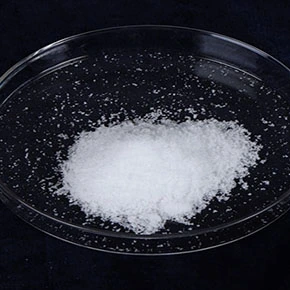
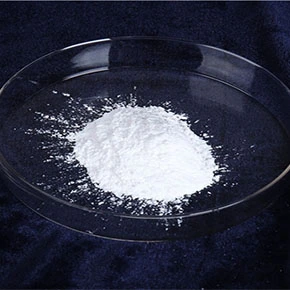
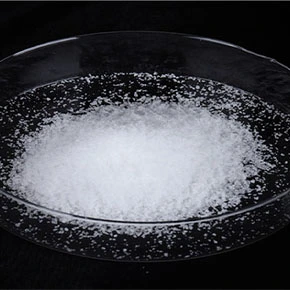
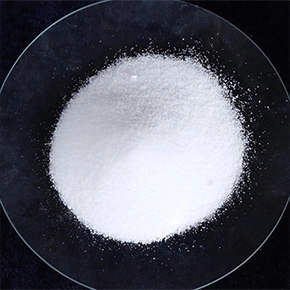
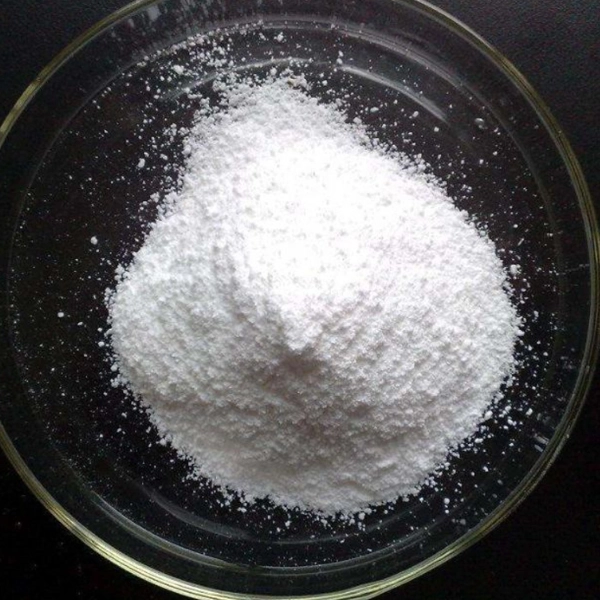
Two useful anionic surfactant examples are SDS and SDBS. Sodium dodecyl sulfate is an alkyl sulfate widely associated with foaming, wetting and detergency. Forward Science supplies its SDS in 25 kg bags and lists the material for surfactant and foaming applications.
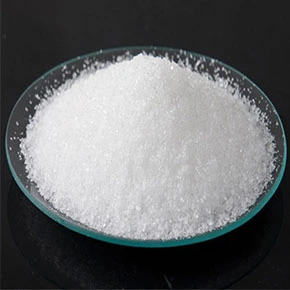
Sodium dodecyl benzene sulfonate belongs to the alkylbenzene sulfonate family. Forward Science lists 95±3% active matter for its crystal grade, illustrating why commercial specification is just as important as chemical family when comparing products.
The performance of anionic surfactants depends on the balance between their water-attracting head group, oil-attracting hydrophobic structure and the conditions of the complete formulation.
Hydrophilic-Lipophilic Balance, or HLB, is often used as a convenient way to describe whether a surfactant behaves more hydrophilically or lipophilically. However, formulators should not use an HLB number alone to select anionic materials. HLB is especially useful as a screening concept for emulsification, while charged surfactants must also be evaluated for ionic interactions, water hardness and electrolyte sensitivity.
For example, two anionic materials can both provide detergency but behave differently in hard water or high-electrolyte systems. Calcium and magnesium ions may influence foam, solubility and cleaning performance, while salt concentration may alter viscosity or phase stability.
Hydrophobic structure is equally important. SDS contains a relatively straightforward C12 alkyl chain, whereas SDBS contains an alkylbenzene structure. These structural differences influence how each surfactant interacts with oils, surfaces and dispersed particles.
This is why professional formulation work should evaluate cleaning efficiency, wetting speed, foam profile, dispersion, solubility and compatibility under the actual concentration, temperature and water conditions expected in production.
Anionic surfactants are used across industrial formulations where cleaning, wetting, emulsification, foaming or particle dispersion is required.
Household and institutional detergent systems are among the most familiar applications. Here, surfactants help water wet contaminated surfaces, loosen soils and keep oils dispersed during washing.
Industrial cleaners may use similar principles but face different requirements. Metal degreasers, equipment cleaners and hard-surface formulations can require stronger soil removal, specific foam levels or compatibility with alkaline builders and solvents.
In textile manufacturing, surfactants may support wetting, washing, scouring and processing operations. In dispersion systems, selected sulfonates can help stabilize particles in aqueous media. Forward Science, for example, lists SDBS applications involving dispersion of graphene nanoflakes and suspension of carbon nanotubes.
Anionic materials may also be blended with nonionic or amphoteric surfactants to adjust foam, detergency, wetting and stability. The correct blend depends on the target process rather than on a fixed ratio.
Buyers evaluating available chemistries can review Forward Science's broader range of anionic surfactants for detergent, cleaning and industrial applications. The company's current category includes SDS and SDBS products with published specifications.
Reliable anionic surfactant suppliers should provide consistent specifications, traceable quality information and materials that match the customer's formulation rather than simply offering the lowest unit price.
Before selecting a surfactant manufacturer or supplier, buyers should evaluate:
Chemical identity and grade: Confirm chemical name, CAS number, physical form and intended application.
Active matter and impurities: Review active content, moisture, inorganic salts, pH and other relevant specification limits.
Batch documentation: Check whether COA, specification sheets and safety documentation are available.
Application compatibility: Test the material under actual pH, temperature, water hardness and formulation conditions.
Packaging and supply reliability: Confirm packaging, storage requirements, MOQ, lead time and batch consistency.
Cost should also be compared on an active-matter basis. A product with 95% active matter and another supplied at a much lower concentration should not be compared only by price per kilogram.
Forward Science positions its industrial chemical range around surfactant solutions for different manufacturing applications and publishes product-level parameters for its SDS and SDBS grades. For buyers, this technical transparency makes it easier to move from initial supplier screening to sample testing and commercial qualification.
Anionic surfactants are an important class of ionic surfactants used for detergency, wetting, foaming, emulsification and dispersion across cleaning and industrial manufacturing.
The best material cannot be selected by chemical family alone. Formulators should compare molecular structure, active matter, water conditions, foam requirements, compatibility and process conditions, while purchasing teams should evaluate documentation and batch consistency.
Forward Science supplies SDS and SDBS within its anionic surfactants portfolio, giving industrial buyers options for matching surfactant chemistry and commercial specification to their formulation requirements.
Anionic surfactants are surface-active materials whose functional surfactant portion carries a negative charge in an aqueous system.
Common families include alkyl sulfates, alkylbenzene sulfonates, olefin sulfonates, carboxylates and phosphate-based surfactants. SDS and SDBS are two widely recognized examples.
SDS is an alkyl sulfate, while SDBS is an alkylbenzene sulfonate. Their different molecular structures can produce different detergency, foam, wetting and dispersion behavior.
Many provide strong detergency, but performance varies considerably. Some materials are selected more for wetting, foam, emulsification or dispersion than for maximum cleaning strength.
Yes. They are commonly blended to modify detergency, foam, wetting, stability or water-hardness performance, but the complete formulation should always be tested.
Compare product identity, active matter, impurity limits, COA consistency, technical documentation, application suitability, packaging, MOQ and supply reliability rather than relying on price alone.