English

Choosing between sodium dodecyl sulfate vs sodium dodecylbenzene sulfonate can significantly influence detergency, foaming, wetting, dispersion and formulation behavior. Both SDS and SDBS are anionic surfactants, but they are not chemically identical and should not be treated as interchangeable ingredients.
Sodium dodecyl sulfate, also called SDS or sodium lauryl sulfate, contains a straight C12 alkyl chain with a sulfate group. Sodium dodecylbenzene sulfonate, or SDBS, contains a dodecylbenzene hydrophobic structure attached to a sulfonate group. This structural difference affects how each detergent surfactant interacts with water, oils, particles and other formulation ingredients.
For formulators and industrial buyers, the right choice depends on the required cleaning strength, foam profile, wetting behavior, solubility and finished-product application.
The key chemical difference between sodium dodecyl sulfate and sodium dodecylbenzene sulfonate is that SDS is an alkyl sulfate, while SDBS is an alkylbenzene sulfonate.
SDS has the molecular formula C12H25NaO4S and a molecular weight of approximately 288.38 g/mol. SDBS is commonly represented by the formula C18H29NaO3S with a molecular weight of approximately 348.5 g/mol. These identifiers are documented in the PubChem SDS record and corresponding SDBS chemical data.
| Property | SDS | SDBS |
|---|---|---|
| Chemical family | Alkyl sulfate | Alkylbenzene sulfonate |
| Common abbreviation | SDS / SLS | SDBS |
| Molecular formula | C12H25NaO4S | C18H29NaO3S |
| Molecular weight | Approx. 288.38 g/mol | Approx. 348.5 g/mol |
| Hydrophobic structure | C12 alkyl chain | Alkyl chain + benzene ring |
| Main formulation role | Foaming, cleaning, wetting | Detergency, emulsification, dispersion |
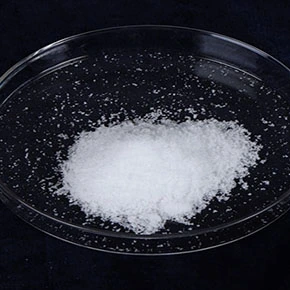
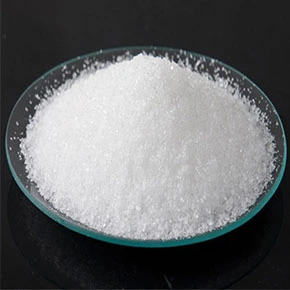
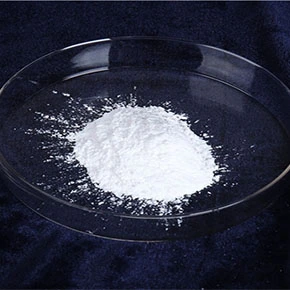
Forward Science supplies both sodium dodecyl sulfate and sodium dodecylbenzene sulfonate for industrial formulations, allowing buyers to compare specifications rather than selecting only by surfactant category.
In an SDS vs SDBS comparison, SDS is commonly selected when strong foaming and wetting are important, while SDBS is often considered for strong detergency, oil emulsification and particle dispersion.
SDS is widely recognized for high surface activity and substantial foam generation. These characteristics make it useful in formulations where visible foam, rapid wetting and cleaning performance are important. Forward Science describes SDS as providing foaming, emulsifying and cleaning properties and also lists its use in toothpaste formulations.
SDBS combines an alkyl chain with an aromatic benzene structure. In detergent and industrial cleaning formulations, it can provide strong soil removal, emulsification and dispersion performance. Forward Science also identifies SDBS as an anionic surfactant used for detergency and dispersion applications.
However, an anionic surfactant comparison should not be based on one performance characteristic alone. Actual cleaning results depend on concentration, water hardness, pH, temperature, builders, solvents and any nonionic or other surfactants present in the formulation.
Sodium dodecyl sulfate and sodium dodecylbenzene sulfonate overlap in cleaning applications but are often selected for different formulation priorities.
SDS is commonly considered in detergents, institutional cleaners, personal-care systems, laboratory applications and formulations requiring strong foaming or wetting. Its alternative name, sodium lauryl sulfate, is especially common in personal-care and consumer-product terminology.
SDBS is frequently associated with household and industrial detergents, degreasers, textile chemicals, dispersion systems and other applications where detergency and oil or particle dispersion are important. Forward Science also identifies applications involving graphene and carbon-nanotube dispersion for its SDBS product.
For formulators evaluating multiple options, Forward Science's anionic surfactants range provides both SDS and SDBS products. The most suitable material should be chosen according to the complete formulation rather than assuming every anionic detergent surfactant produces the same foam, cleaning and compatibility profile.
SDS and SDBS are water-soluble anionic surfactants, but their practical formulation behavior can vary with concentration, temperature, electrolyte content and other ingredients.
Forward Science lists its SDS as completely dissolving at 3% in deionized water, with a specified pH of 6.0–8.0 for a 1% solution. Its commercial SDBS specification lists a 1% pH range of 8.5–11.5, showing that purchasing specifications can differ substantially even between two anionic surfactants.
Compatibility also matters. Both SDS and SDBS carry negative ionic charges, so formulators should carefully test systems containing cationic ingredients because opposite charges may cause undesirable interactions or precipitation. Blending with nonionic surfactants is commonly considered when formulators need to modify detergency, foam, wetting or stability.
Commercial grade also affects performance. Active matter, moisture, inorganic salts and impurities should therefore be reviewed alongside solubility before replacing SDS with SDBS—or vice versa—in an established formulation.
Selecting between sodium dodecyl sulfate vs sodium dodecylbenzene sulfonate requires matching surfactant properties to the formulation's cleaning target, foam requirement and processing conditions.
A practical selection should consider:
Cleaning requirement: Evaluate whether the priority is rapid wetting and foam generation or stronger oil-removal and dispersion performance.
Finished-product foam profile: SDS may suit formulations where abundant foam is desirable, while SDBS may be evaluated where detergency is the stronger priority.
Formulation compatibility: Test interaction with builders, salts, nonionic surfactants, solvents and other functional ingredients.
Commercial specification: Compare active matter, moisture, pH, inorganic salts, physical form and batch consistency.
Price per kilogram should not be the only purchasing criterion. A lower-priced surfactant may require a different dosage or produce a different finished-product performance, making the actual cost-in-use more important than raw-material price alone.
Forward Science provides sodium dodecylbenzene sulfonate with published specifications including 95±3% active matter for the crystal grade, enabling industrial buyers to compare technical parameters with their target formulation requirements.
The sodium dodecyl sulfate vs sodium dodecylbenzene sulfonate decision is ultimately a formulation choice rather than a question of which surfactant is universally better. SDS offers strong foaming, wetting and detergency, while SDBS is attractive for detergent, emulsification and dispersion applications.
For an effective SDS vs SDBS selection, formulators should compare chemical structure, active matter, foam requirements, cleaning performance, compatibility and cost-in-use. Forward Science supplies both surfactants with published technical specifications to support industrial formulation and sourcing decisions.
SDS is an alkyl sulfate containing a C12 chain, while SDBS is an alkylbenzene sulfonate containing both an alkyl chain and a benzene ring.
Yes. Both carry negatively charged surfactant groups in aqueous systems and belong to the broader anionic surfactant category.
It depends on the target formulation. SDS is often selected for strong foaming and wetting, while SDBS is commonly evaluated for detergency, emulsification and dispersion.
Not necessarily. Their structure, molecular weight, active matter and formulation behavior differ, so substitution should be validated through formulation testing.
SDS has a molecular weight of approximately 288.38 g/mol, while SDBS is approximately 348.5 g/mol for the PubChem structures referenced here.
Buyers should review active matter, moisture, pH, inorganic salts, physical form, COA consistency, packaging and suitability for the intended industrial formulation.